More Than a Game: What Beginners Are Often Surprised to Discover About Mahjong
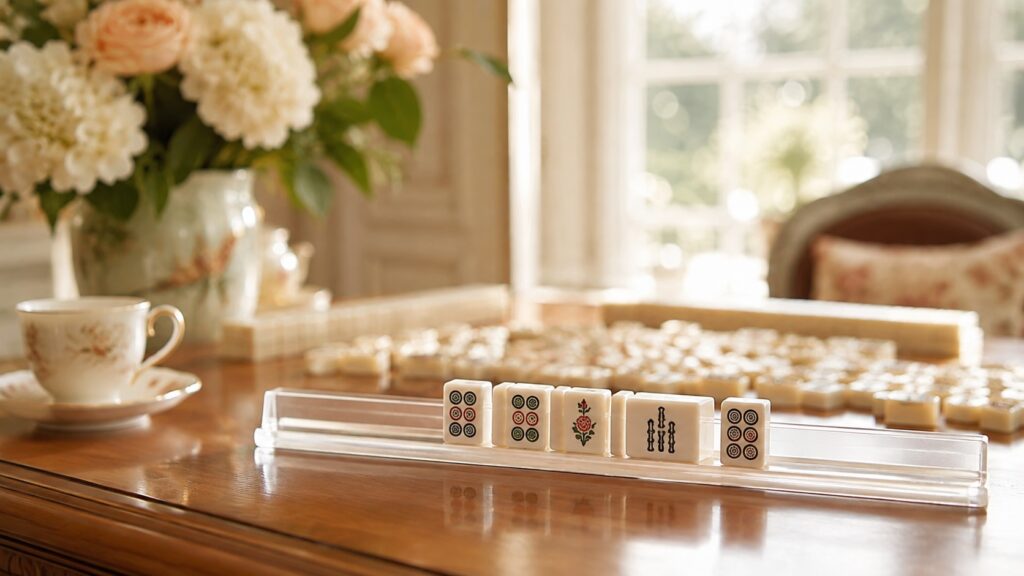
When people first reach out about learning Mahjong, they usually have one question:
“Is it really as complicated as it looks?”
It’s a fair question.
At first glance, Mahjong can seem intimidating. There are beautiful racks of tiles, colorful National Mah Jongg League cards, a language all its own, and players who appear to know exactly what they’re doing.
It’s easy to think everyone else has some secret knowledge.
The truth is—they didn’t start that way.
Every experienced Mahjong player was once sitting exactly where you are now: wondering how anyone could possibly remember all those hands or know which tile to discard next.
And then something wonderful happens.
Little by little, the game starts to make sense.
You begin recognizing patterns.
The Charleston becomes familiar instead of confusing.
The rhythm of the game starts to feel natural.
Before long, you’re making decisions instead of simply following instructions.
But here’s what surprises most beginners.
The biggest challenge isn’t actually learning the rules.
It’s giving yourself permission to be a beginner.
So many adults feel like they should “get it” immediately. We worry about slowing others down or making mistakes.
Mahjong has a funny way of reminding us that learning something new is supposed to include mistakes.
In fact, some of the best moments around the table happen because someone accidentally discards the wrong tile, forgets to exchange a joker, or proudly announces Mahjong to then find out they are one tile short.
We laugh.
We learn.
Then we shuffle and play again.
Those moments become part of the story.
At Central MA Mahjong, that’s exactly the environment I hope to create.
A place where questions are encouraged.
Where everyone remembers what it felt like to learn.
Where progress matters more than perfection.
And where the goal isn’t just to finish a winning hand—it’s to enjoy the people sitting around the table.
Mahjong is an incredible game.
It keeps your mind engaged, challenges your strategy, and somehow manages to be both competitive and deeply social at the same time.
But if you ask many players why they keep coming back, they rarely start by talking about the tiles.
They talk about the people.
The conversations.
The laughter.
The friendships that form week after week.
Those are the things that keep us returning to the table.
The tiles simply give us a reason to gather.
If you’ve been thinking about learning Mahjong but have been waiting until you feel “ready,” consider this your invitation.
You don’t have to know everything before you begin.
You just have to be willing to learn.
Everyone starts somewhere.
And sometimes, all it takes is sitting down at the table.
